
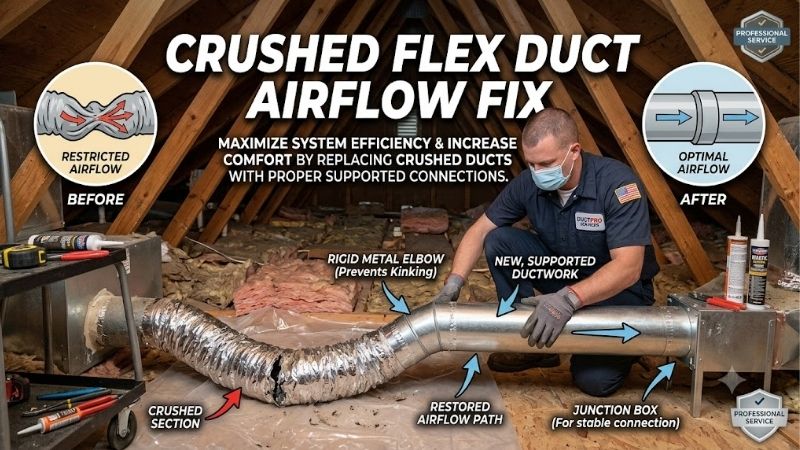
Crushed flex duct airflow fix methods restore proper ventilation when cramped laundry spaces squish soft transition hoses behind appliances. Restricting exhaust velocity causes excessive heat accumulation, long drying cycles, and severe lint buildup. Applying durable rigid connectors keeps airflow moving safely through tight room walls.
How to Choose the Right Crushed Flex Duct Airflow Fix
Implementing a crushed flex duct airflow fix requires evaluating wall clearance alongside structural routing constraints. Standard foil tubing collapses easily when dryers are pushed against rear walls, stopping exhaust flow. Upgrading to rigid space-saving fittings ensures moist air escapes freely without kinked flexible transition hose bends.
Evaluating Space Constraints and Wall Clearance
Measuring distance between appliance rear ports and wall outlets dictates which replacement hardware fits best. When space drops below four inches, standard plastic ducts flatten under rear appliance weight. Selecting a compact rigid metal elbow creates a smooth exhaust pathway inside cramped laundry closets.
Proper clearance prevents unexpected crushing during machine vibration or accidental rear movement. Installing heavy-gauge metal fittings protects structural wall openings while maintaining full pipe diameter. Smooth interior surfaces allow hot vapor to exit rapidly without creating back pressure bottlenecks or lint traps.
Selecting Rigid Metal vs Semi-Rigid Tubing
Finding an effective crushed flex duct airflow fix involves replacing fragile foil lines with solid metal ducting. Rigid aluminum walls resist accidental crushing, ensuring consistent exhaust velocity over long periods. Transition components retain their cylindrical shape despite tight wall positioning behind heavy dryers.
Semi-rigid metal pipes offer flexible maneuverability while providing far greater crush resistance than thin foil options. Choosing smooth-walled metal pipes prevents dangerous heat buildup and minimizes severe exhaust restriction. Building codes mandate solid metal materials inside wall cavities to preserve home thermal safety.
Understanding Back Pressure and Blower Strain
Squished ventilation lines increase static back pressure inside internal appliance drum chambers. High back pressure forces damp air to remain near laundry loads, extending cycle times and wasting electric power. Keeping exhaust pathways wide open protects sensitive thermal sensors from continuous overheating damage.
Restricted airflow places unnecessary strain on blower wheel motors, shortening overall appliance lifespan. Installing a streamlined periscope vent lowers internal resistance, allowing exhaust fans to perform efficiently. Protecting your motor from thermal overload lowers annual utility bills and prevents repairs.
Installing Compact Telescoping Vent Components
Telescoping metal fittings slide smoothly to accommodate varied distances between wall outlets and appliance ports. Flat rectangular ducts slip neatly into two-inch gaps behind dryers without sacrificing total exhaust volume. Adjustable sliding sections make alignment straightforward in complex offset wall installations.
Rugged aluminum construction prevents flattened duct surfaces while channeling moisture outdoors without restriction. Eliminating excess slack prevents internal lint buildup from creating dangerous fire hazards behind laundry walls. Secure mechanical fastenings ensure reliable performance during high-vibration drying cycles.
Ensuring Airtight Seals and Easy Cleaning Access
A airtight connection stops humid exhaust air and fine dust from escaping into interior laundry room spaces. Magnetic quick-connect fittings snap firmly together while allowing quick disconnection for routine duct maintenance. Self-aligning magnetic vent coupling technology eliminates awkward crawling behind machines.
Clamping mechanisms must maintain firm structural grip under continuous thermal expansion and motor vibration. Applying high-grade foil HVAC tape along component seams prevents small air leaks behind wall gaps. Accessible transition hardware simplifies annual lint removal, keeping home exhaust systems running smoothly.
Top Picks for Crushed Flex Duct Airflow Solutions
Selecting a crushed flex duct airflow fix depends on rear clearance depth, wall alignment, and ducting material quality. The hardware selections below eliminate flattened transition hoses behind tight appliance spaces. These durable metal connectors maintain maximum exhaust velocity and keep home laundry rooms fully safe.
| Product Name | Type | Key Feature | Best For |
|---|---|---|---|
| MagVent MV-90 | Magnetic 90° Elbow | Self-aligning magnetic seal | Tight Laundry Closets |
| Builder’s Best Close Elbow | Compact Rigid Elbow | 90° turn in 4 inches clearance | Tight Rear Clearance |
| Builder’s Best Saf-T-Duct | Telescoping Periscope | Flat profile 2-inch clearance | Offset Wall Outlets |
| DryerDock Quick Connect | Twist-Lock Wall Adapter | Easy-snap maintenance release | Frequent Cleaning Access |
| Deflecto Skinny Duct | Rectangular Aluminum | Adjusts 27 to 48 inches long | Narrow Rear Gaps |
MagVent MV-90 Magnetic Dryer Vent Coupling
This magnetic fitting offers a crushed flex duct airflow fix for cramped closets where space is limited. Strong neodymium magnets snap self-aligning duct sections together tightly behind machines. The integrated 90-degree metal turn prevents squishing transition lines and eliminates static back pressure bottlenecks.
While this premium magnetic coupling delivers outstanding airflow, its initial cost requires a larger budget than simple plastic elbows. Precise wall height alignment is necessary during initial setup to guarantee magnet contact. Overall, it creates a leak-free seal that protects appliances and saves valuable floor space.
Builder’s Best Close Elbow 90-Degree Connector
Designed for tight rear setups, this compact rigid elbow turns right-angle corners in four inches of space. Its rotating snap-lock collar attaches smoothly without twisting flexible lines during installation. Upgrading to solid aluminum prevents squishing transition hoses while maximizing overall dryer efficiency.
Because the body uses rigid aluminum construction, installer handling requires care to prevent minor surface dents. Its fixed right-angle turning radius suits close alignment setups best rather than extreme offsets. It remains an affordable solution that stops flattened ducting behind laundry machines effectively.
Builder’s Best Saf-T-Duct Periscope Vent Duct
Homeowners needing a crushed flex duct airflow fix in ultra-thin spaces will appreciate this flat aluminum periscope. Its smooth rectangular design requires only two inches of rear wall clearance behind dryers. Sliding telescoping sections adjust easily to connect misaligned wall outlets with lower appliance ports.
The smooth interior aluminum channel preserves exhaust airflow while offering exceptional close clearance performance. Installing this rigid unit requires firm manual effort when adjusting sliding metal segments into place. Wrap joining seams with foil tape to ensure airtight operation under heavy laundry usage.
DryerDock Quick Connect Dryer Vent Kit
Ideal for home laundry setups requiring regular cleaning access, this twist-lock adapter connects wall pipes instantly. Its rigid plastic flange holds transition hoses firmly off floor surfaces, preventing accidental flattening. The quick-release mechanism simplifies disconnecting machines without damaging the vent connector.
This ABS plastic adapter is meant only for transition points right at wall surface connections near appliances. It should not be installed inside hidden wall cavities where local building codes mandate solid metal ducting. It remains a user-friendly component that simplifies routine maintenance and prevents hose kinking.
Deflecto Skinny Duct Telescoping Aluminum Vent
Built for narrow laundry spaces, this rectangular telescoping vent slides from 27 to 48 inches in length. Its low-profile structure allows pushing dryers within two inches of rear wall surfaces without flattening ducts. Replacing soft foil with rigid aluminum keeps air moving freely through flexible transition hose paths.
Adjusting telescoping aluminum sections requires careful alignment during installation to ensure proper joint sealing. High-grade HVAC foil tape must be applied across all sliding seams to prevent exhaust air leakage. It provides excellent space-saving performance and long-term crush protection behind appliances.
Frequently Asked Questions
Addressing common questions regarding squished ventilation lines helps maintain safe exhaust airflow behind appliances. Clear answers clarify structural clearance limits, fire prevention techniques, and component selection rules. Review these factual facts to ensure your laundry setup meets building code standards.
Why does a crushed flex duct ruin dryer performance?
Understanding why a crushed flex duct airflow fix is necessary starts with examining internal air resistance. Flattened transition lines restrict exhaust movement, forcing damp air back into the dryer drum chamber. Moisture remains trapped around clothing, extending cycle times and increasing electric power consumption.
Severe exhaust restriction forces appliance motors to work harder, triggering thermal limit switches continuously. Overheated heating elements fail prematurely, requiring expensive repairs or complete unit replacement. Installing rigid metal elbows keeps exhaust pathways fully open, preserving optimal drying speed.
Can a crushed transition vent cause a laundry fire?
Yes, squished transition hoses present a major residential fire hazard by trapping loose lint inside restricted folds. Restricted airflow causes internal temperatures to spike rapidly inside heating element chambers. Trapped lint combines with extreme heat, creating highly flammable conditions behind laundry room walls.
Replacing fragile foil flex lines with rigid aluminum components eliminates narrow crush points completely. Smooth metal walls prevent lint accumulation along internal seam edges, ensuring safe exhaust discharge outdoors. Maintaining unobstructed duct diameter keeps thermal conditions balanced during heavy drying loads.
Is a telescoping periscope better than flexible foil?
A telescoping periscope offers far superior crush resistance compared to flexible foil transition hoses behind dryers. Its flat rectangular aluminum body requires only two inches of rear clearance without squishing airflow paths. Rigid metal walls maintain structural shape despite tight wall gaps or heavy machine vibration.
Flexible foil ducts sag easily and crush when appliances shift backward, creating severe back pressure bottlenecks. Building codes restrict concealed foil tubing because ribbed surfaces collect dangerous lint buildup quickly. Upgrading to a rigid aluminum periscope vent preserves full airflow and enhances home safety.
How often should you replace crushed flex transition hose?
You should replace any crushed flex transition hose immediately upon detecting flattened duct sections or long dry cycles. Operating dryers with squished ventilation lines damages internal electrical components and creates fire hazards. Upgrading to rigid metal fittings prevents future crushing and ensures long-lasting safety.
Regular annual inspections help identify hidden duct sagging or accidental crushing behind heavy laundry machines. Using magnetic vent coupling or quick-disconnect fittings simplifies disconnecting dryers during routine cleaning. Inspecting transition hardware regularly keeps your home exhaust system running at peak efficiency.
Final Thoughts
Finding a permanent crushed flex duct airflow fix protects your home from fire hazards while maximizing dryer efficiency. Replacing squished transition hoses with rigid elbows or periscopes maintains unobstructed exhaust velocity. Upgrade your laundry vent connections today to enjoy faster drying cycles and total peace of mind.
As an Amazon Associate we earn from qualifying purchases at no extra cost to you.









Write Your Review
No reviews yet. Be the first to share your experience!