
Our Short List of 3

- Best for: A complete first single-tap build in a spare refrigerator
- Brand: Kegco
- Model Number: BF STCK-5T
- Includes empty 5 lb aluminum CO2 tank, as stated in the listing description
- Pro Series dual gauge regulator, as stated in the listing description

- Best for: A tower build where a compatible tank is already available separately
- Brand: BACOENG
- Model Number: P1300
- No tank included, as stated in the product name
- Standard tower kegerator conversion kit, as stated in the product name
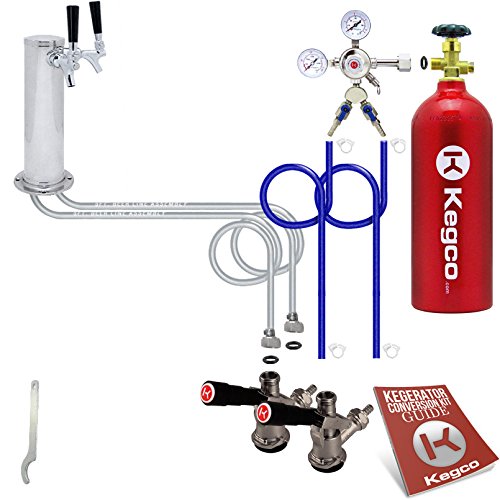
- Best for: A first build planned around pouring two products from one refrigerator
- Brand: Kegco
- Model Number: BF 2STCK-5T
- 2 Product Tower, as stated in the product name
- Includes 5 lb Co2 Tank, as stated in the product name
All 3 Picks at a Glance
| Product | Specs | Action |
|---|---|---|
| Kegco BF STCK-5T Standard Tower Kegerator Conversion Kit with 5 lb Co2 Tank, Standard |
| Check price on Amazon |
| BACOENG Standard Tower Kegerator No Tank Beer Conversion Kit |
| Check price on Amazon |
| Kegco BF 2STCK-5T Standard 2 Product Tower Kegerator Conversion Kit with 5 lb Co2 Tank, Chrome |
| Check price on Amazon |
A spare refrigerator already does the hard part of a home draft setup, keeping a keg cold in a steady cabinet for weeks at a time. A conversion kit adds the parts that fridge lacks: a tower and faucet for pouring, a coupler that connects to the keg, a regulator that controls gas pressure, and the beer and gas lines that join everything together.
For craft beer fans, the right kit depends on how many kegs you want pouring, whether you already own a gas tank, and which keg connection your favourite beers use. The three kits below cover a complete single-tap build, a no-tank tower build, and a two-product tower build, so you can match the hardware to your fridge and your pouring plans.
Quick Picks
As an Amazon Associate we earn from qualifying purchases.
| Product | Best for | Key spec from title |
|---|---|---|
| Kegco BF STCK-5T Standard Tower Kegerator Conversion Kit with 5 lb Co2 Tank, Standard | Complete first build | 5 lb Co2 Tank |
| BACOENG Standard Tower Kegerator No Tank Beer Conversion Kit | Builders who already own a tank | No Tank |
| Kegco BF 2STCK-5T Standard 2 Product Tower Kegerator Conversion Kit with 5 lb Co2 Tank, Chrome | Pouring two products | 2 Product Tower |
Reading this table is a useful starting point, but it should not be the whole decision. A kit that looks complete can still be wrong for your kegs if its coupler does not match the kegs you actually buy, and a no-tank kit can be the smarter choice if a suitable tank is already sitting in your garage. Check the coupler, the tank position, and the space above your refrigerator before you settle on a tower height or a tap count. Small measurements made now prevent a conversion that fits on paper but crowds the room, blocks a cabinet door, or leaves a line kinked behind the fridge.
How to Choose
Choosing well means working through the conversion in the order the beer travels, from the keg connection through the lines and regulator to the faucet. Each decision below affects the next one, so a kit should be judged as a connected system rather than as a collection of shiny parts in a box.
Match the Coupler to Your Kegs
The coupler is the connection between your keg and the rest of the system, and it must match the kegs you plan to serve. Many domestic craft and commercial kegs in the United States use the D system connection described in the listings in this guide, but imported kegs and some specialty kegs use different fittings. Check the kegs from your local brewery or supplier before ordering, and write down the system name rather than relying on a photograph. A tower, regulator, and lines cannot rescue a build whose coupler will not lock onto the keg you bring home.
Decide Whether the Kit Should Include a Tank
Some conversion kits include a gas tank and others deliberately leave it out, and neither approach is automatically better. A kit with a tank suits a first build where no gas equipment exists yet, because the main pressure parts arrive together. A no-tank kit suits a builder who already owns a compatible tank, or who wants to source a tank and filling locally. Either way, confirm where the tank will stand inside or beside the refrigerator, how it will stay upright, and where you will have it filled before the first keg arrives.
Choose a Tower and Tap Count for Your Fridge
A tower mounts on top of the refrigerator and puts the faucet at a comfortable pouring height, but it needs clear space above the cabinet and a sound surface for mounting. A single faucet keeps a first conversion simple and leaves more room inside for one keg and a tank. Two faucets let you pour two products, yet they also need a second keg, a second coupler path, and enough interior space for both. Measure the fridge interior, the keg footprint, and the clearance above the fridge before choosing tap count on ambition alone.
Check the Regulator, Lines, and Small Hardware
A regulator controls the pressure pushing beer from the keg, and a dual gauge design lets you read pressure information at more than one point in the system. Lines, clamps, washers, a gasket, and a faucet wrench sound minor until one missing piece stops an installation halfway through. Read the listing for exactly which lines and fittings are included, how the tower attaches, and what instructions are provided. Keep spare washers in a labelled place, because small sealing parts are easy to lose during cleaning and are often the difference between a steady pour and a slow leak.
The 3 Best Options
Each option below is a refrigerator conversion kit, not a complete kegerator with its own refrigerated cabinet. That distinction matters, because you supply the fridge or freezer and the keg, while the kit supplies the dispensing hardware described in its listing. Compare the included tank, coupler, tower, and tap count against the plan you made above, and treat any part not named in the listing as a part you may still need to source separately.
Kegco BF STCK-5T Standard Tower Kegerator Conversion Kit with 5 lb Co2 Tank, Standard
- Best for: A complete first single-tap build in a spare refrigerator
- Brand: Kegco
- Model Number: BF STCK-5T
- Includes empty 5 lb aluminum CO2 tank, as stated in the listing description
- Pro Series dual gauge regulator, as stated in the listing description
A complete first single-tap build in a spare refrigerator
The tank is listed as empty, so it still needs filling before the first pour
This Kegco kit is the straightforward starting point for a first single-tap conversion, because its listing brings the tower, regulator, coupler, wrench, and a gas tank together in one package. That completeness helps a craft beer fan who is converting a spare fridge and does not already own dispensing hardware to collect piece by piece. The single faucet keeps the build focused on one keg at a time, which suits a household that rotates one craft keg, learns pressure and line cleaning on a simple system, and then decides later whether a second tap is really needed.
BACOENG Standard Tower Kegerator No Tank Beer Conversion Kit
- Best for: A tower build where a compatible tank is already available separately
- Brand: BACOENG
- Model Number: P1300
- No tank included, as stated in the product name
- Standard tower kegerator conversion kit, as stated in the product name
A tower build where a compatible tank is already available separately
No tank is included, so the gas side is not complete from this kit alone
The BACOENG kit takes the opposite approach on the tank question, giving a tower conversion for a builder who already has gas equipment or prefers to source a tank locally. Its listing describes a standard tower setup with a single faucet, a lever handle coupler, and beer tubing included with the tower, which makes it a focused option for turning an existing refrigerator into a one-tap draft station. For a craft beer fan upgrading from bottles or a temporary picnic tap, that narrower scope can be an advantage, provided the missing tank is planned for rather than discovered later.
Kegco BF 2STCK-5T Standard 2 Product Tower Kegerator Conversion Kit with 5 lb Co2 Tank, Chrome
- Best for: A first build planned around pouring two products from one refrigerator
- Brand: Kegco
- Model Number: BF 2STCK-5T
- 2 Product Tower, as stated in the product name
- Includes 5 lb Co2 Tank, as stated in the product name
A first build planned around pouring two products from one refrigerator
Two products need enough fridge interior space for the extra keg and its lines
This two-product Kegco tower kit is for the craft beer fan who already knows one tap will feel limiting, perhaps because a household wants a lighter beer and a darker beer pouring side by side, or because gatherings regularly empty a single keg style too quickly. Its listing names a two-product tower and a gas tank in the same package, which frames it as a broader starting build rather than a later add-on. The extra tap brings extra planning, though, since interior keg space, line routing, and keeping track of which line serves which keg all become part of the setup.
After comparing those three scopes, return to the simplest question: what will you pour in the first month, not in an imagined future bar. A single keg of a favourite local beer, served well and finished while it is fresh, is a better outcome than a crowded fridge with two kegs connected poorly. Buy the kit that matches the kegs you can actually obtain, the fridge you actually own, and the cleaning routine you will actually keep, and leave expansion for a later, deliberate upgrade.
Which One Fits Your Situation
Your situation should decide the kit more than the longest parts list should. Think about the refrigerator you have, the kegs available near you, and how many people will realistically pour from it in a normal week. The situations below translate those practical limits into a clear direction, so you can choose a conversion that fits daily use instead of one that only looks impressive on installation day.
You Are Converting a Spare Fridge for the First Time
Start with a complete single-tap kit that includes a tank, such as the Kegco single-tower option in this guide. One keg, one faucet, and one set of lines let you learn mounting, pressure setting, and cleaning without juggling two products at once. Leave room around the build for checking connections, and keep the instructions nearby during the first keg change, when small steps are easiest to forget.
You Already Own a Tank From Another Setup
A no-tank tower kit can make sense when your existing tank is compatible, in good condition, and available for this refrigerator. Confirm the regulator connection and the coupler for your kegs before relying on that older equipment, because age and fitting differences matter. The BACOENG option in this guide is framed for that situation, with the tower side supplied and the tank sourced from what you already have or from a local supplier.
You Want Two Beers Pouring for Gatherings
Choose a two-product tower kit only after measuring that your refrigerator can hold two kegs plus the tank and lines without forcing the door or kinking hoses. Two taps are enjoyable when friends have a real choice, but they double the kegs to store, the lines to clean, and the connections to check. If your fridge is compact, a well-run single tap will usually serve a gathering more reliably than a cramped double setup.
You Mostly Serve One Local Craft Keg at a Time
Keep the conversion simple and put your effort into freshness and cleaning rather than extra faucets. A single-tap kit matches a routine of picking up one keg from a local brewery, pouring it over a short period, and cleaning the line promptly when it empties. That rhythm suits many craft beer fans better than variety on tap, because the beer turns over faster and the system stays easier to maintain between kegs.
Common Mistakes
- Buying a kit before confirming the coupler system on the kegs you can actually buy locally.
- Choosing two taps without measuring whether the refrigerator holds two kegs, a tank, and lines comfortably.
- Forgetting that a tank included in a kit may arrive empty and still needs filling before use.
- Drilling or mounting a tower before checking clearance above the fridge and the location of any lines inside the cabinet.
- Neglecting line cleaning and washer checks between kegs, then blaming the kit for pouring problems caused by residue or leaks.
Avoiding those mistakes is mostly a matter of slowing down at the planning stage. Photograph the inside of your refrigerator, measure it with the door closed in mind, and list every part the kit does not include. That short exercise reveals whether you need a tank fill, a different coupler, extra line, or simply a smaller plan, and it costs nothing compared with returning hardware or reworking a tower mount after holes have been made in a cabinet you wanted to keep using.
Frequently Asked Questions
Does a conversion kit include the refrigerator and the keg?
No. A conversion kit supplies dispensing hardware for a refrigerator or freezer you already own, and the keg itself is obtained separately from a brewery or supplier. The listings in this guide describe towers, couplers, regulators, lines, and in two cases a gas tank. Always read the specific listing for what is included, and plan separately for the cold cabinet, the keg, and any filling the tank requires.
What coupler do most domestic kegs in this guide use?
The single-tap listings in this guide describe a D system coupler, which is the connection named for many domestic American kegs. That does not mean every keg uses it, because imported and specialty kegs can use different systems. Ask your brewery or keg supplier to name the coupler system for the exact keg you will collect, then match that name to the kit listing before you order any hardware.
Why would anyone choose a kit without a tank?
A no-tank kit suits a builder who already owns a compatible tank or prefers to buy and fill one locally. It can also simplify replacing an older tower setup where gas equipment is still usable. The important point is planning, because the conversion cannot pour properly until a suitable tank is connected. Treat the tank as required, even when it is not in the box.
How many taps should a first home conversion have?
For most first conversions, one tap is the practical starting point. It keeps the refrigerator layout simpler, leaves more room for a keg and tank, and makes pressure checks and line cleaning easier to learn. Two taps make sense when you have measured space for two kegs and know both will be poured regularly. Adding variety before the basic system runs cleanly usually adds clutter and maintenance rather than enjoyment.
A final check before ordering any kit is to read its listing one more time with your own parts list beside it. Mark each item as included, already owned, or still to source, and do not assume a photograph shows everything in the box. That habit protects the project from the most common disappointment in conversions, which is not poor beer but a missing fitting on the day a fresh keg is already sitting cold in the refrigerator, waiting for a connection that has not arrived yet.








Write Your Review
No reviews yet. Be the first to share your experience!