
Flex duct repair vs replacement decisions require evaluating structural tear severity, outer insulation integrity, and overall airflow loss. Patching minor foil punctures with mastic tape restores system pressure affordably. However, crushed inner cores mandate full duct replacement to prevent ongoing energy waste.
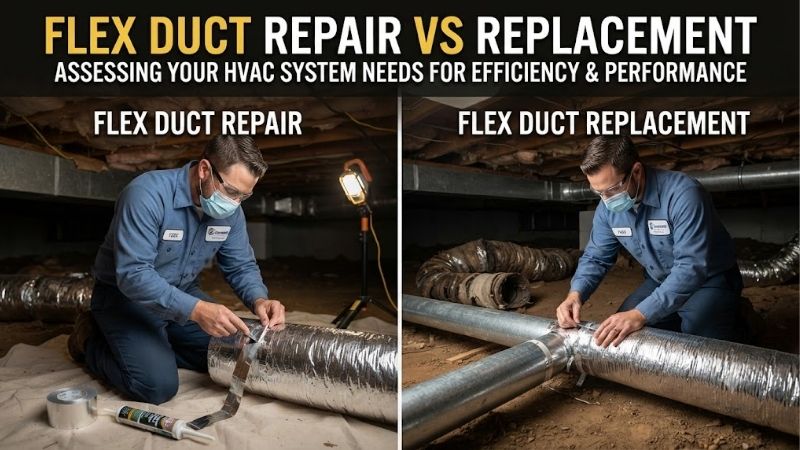
How to Choose the Right Flex Duct Repair vs Replacement
Evaluating flex duct repair vs replacement projects starts with inspecting internal liner damage and spatial accessibility. Minor surface tears in accessible attics favor simple foil taping methods. Conversely, extensive sagging or mold growth requires installing fresh insulated ductwork to protect interior air quality.
Assessment of Outer Insulation and Foil Jacket Damage
Inspecting outer metallic jackets determines if simple flexible ductwork patch repairs will stop thermal loss effectively. Small puncture holes from rogue attic nails or sharp roof trusses seal easily using heavy-duty foil tape. Surface fixes preserve existing insulation without requiring complete flexible run removal.
However, widespread outer sleeve shredding exposes inner fiberglass insulation to attic humidity and ambient heat gains. Saturated insulation loses its thermal rating permanently, increasing monthly utility expenses significantly. Severe outer jacket destruction signals that replacing entire duct sections is necessary.
Extent of Inner Core Collapse and Airflow Loss
Checking inner core structural strength clarifies if patching severe duct airflow loss issues remains practical. Compressed wire helices or crushed inner plastic liners restrict supply air velocity into living spaces permanently. Taping over crushed flexible cores cannot restore proper ventilation balance across rooms.
Installing a rigid HVAC duct splice collar allows homeowners to replace damaged flex segments while keeping healthy runs intact. Splicing restores smooth airflow paths when damage remains localized near exposed attic joists. Severe internal collapse across long runs warrants full flexible ductwork replacement.
Overall Ductwork Lifespan and Material Degradation
Evaluating total ductwork lifespan helps determine whether recurring repair investments make long-term financial sense. Standard flexible ducting typically lasts fifteen to twenty years before plastic membranes become brittle. Aging outer jackets crack easily under routine attic temperature swings and settling dust.
Continually patching ancient torn flex duct sleeve gaps yields diminishing energy savings as new tears appear elsewhere. Upgrading old lines to fresh R-8 insulated flex duct improves energy efficiency and airflow delivery immediately. System age remains a decisive factor when weighing minor patches against full installs.
Top Picks for Flex Duct Repair vs Replacement
Selecting reliable HVAC supplies simplifies flex duct repair vs replacement work while maximizing airflow efficiency. Using high-grade foil tapes, insulated flex ducts, mastic sealants, splice connectors, and heavy nylon ties guarantees airtight connections. The following Amazon picks provide professional repair and replacement solutions.
| Product Name | Category | Primary Feature | Main Benefit |
|---|---|---|---|
| Nashua 324A Foil Tape | Aluminum Tape | Acrylic Cold-Weather Adhesive | Seals outer jacket tears fast |
| Ideal Air R-8 Flex Duct | Insulated Duct | Thick R-8 Fiberglass Sleeve | Full duct run replacement |
| Duck Brand Mastic Tape | Butyl Mastic | Heavy Butyl Rubber Layer | Permanent collar joint seal |
| Suncourt Metal Splice | Duct Connector | Galvanized Beaded Steel | Bridges spliced duct sections |
| Panduit Heavy Cable Ties | Nylon Straps | High Tensile Locking Strength | Secures core to metal collars |
Nashua 324A Premium Cold Weather Foil Tape
This UL-listed aluminum foil tape suits homeowners executing quick flexible ductwork patch repairs on exterior jackets. Its aggressive acrylic adhesive seals tightly against metal and flexible liners across extreme attic temperature ranges. It creates durable, airtight bonds that stop minor air leaks without mess.
However, peeling the protective paper backing feels cumbersome when working in cramped attic crawlspaces with thick gloves. Thin metal foil edges can tear unexpectedly if pulled with excessive force during tight wraps. Still, it delivers an affordable, code-compliant sealing solution for minor flex duct tears.
Ideal Air R-8 Insulated Flexible Ducting 25 Ft
Homeowners undertaking complete HVAC duct replacement will value this heavy-duty R-8 insulated flex duct run. Built with thick fiberglass insulation and tough outer jackets, it reduces thermal losses significantly across cold attics. It offers superior condensation resistance for long supply and return runs.
On the downside, cutting through the inner wire helix requires heavy wire cutters and steady physical effort. The bulky twenty-five-foot box requires ample storage space during transport to job sites. Nevertheless, it provides high-performance insulation for full flexible ductwork replacements.
Duck Brand Heavy Duty Mastic Foil Sealing Tape
This mastic tape repair solution suits DIYers fixing leaky flex duct collars without applying messy liquid mastic paste. Its thick butyl rubber adhesive layer conforms tightly over irregular sheet metal joints and flexible sleeves. It delivers airtight seam sealing that withstands continuous furnace heat cycles.
Downside wise, the ultra-sticky mastic layer sticks instantly to skin or tools if handled carelessly during overhead work. Adjusting tape placement after initial surface contact proves extremely difficult due to strong adhesion. Overall, it provides immediate permanent sealing for exposed flexible duct connections.
Suncourt Galvanized Sheet Metal Duct Splice Connector
This metal HVAC duct splice collar idealizes partial repairs when replacing crushed flex sections between two healthy runs. Crafted from durable galvanized sheet metal, it provides a rigid internal bridge that prevents sleeve collapse. Raised beads ensure flexible duct ends slide on securely before taping.
Negative wise, sheet metal edges feel sharp and require wearing heavy leather work gloves during attic installation. Securing flex sleeves over metal collars requires purchasing separate nylon tension straps or metal clamps. Regardless, it creates strong, reliable junctions for localized flexible duct splices.
Panduit Heavy Duty Nylon HVAC Cable Ties
These heavy-duty nylon ties suit contractors securing inner flex cores tightly to collar fittings during repairs. Engineered with high tensile strength, they lock inner plastic sleeves onto metal connectors without slipping over time. They ensure airtight mechanical connections before wrapping outer insulation jackets.
However, achieving maximum locking tension requires using a specialized cable tie installation tool for tight fits. Hand-tightening alone may leave slight gaps where flexible duct cores join rigid metal trunk lines. Still, they offer essential mechanical clamping force for secure flexible duct installs.
Frequently Asked Questions
Addressing common queries about flex duct repair vs replacement helps homeowners select cost-effective maintenance strategies. Clear answers clarify repair feasibility, expected labor costs, and long-term energy performance. Read these expert insights to plan your ventilation repair or replacement project efficiently.
How do I know if my flex duct needs repair or replacement?
Determining whether to perform flex duct repair vs replacement depends on damage location and overall liner condition. Minor outer foil punctures or loose connection collars seal quickly using mastic tape or metal splice sleeves. Localized surface fixes preserve system pressure without requiring full duct teardowns.
Conversely, widespread crushed wire helices, internal mold contamination, or severe insulation shredding mandate total replacement. Attempting to patch completely collapsed inner cores fails to restore necessary airflow velocity across rooms. Evaluating damage depth guides smart repair choices for your home.
Can you tape a torn flex duct sleeve?
Yes, taping a torn flex duct sleeve works effectively if the inner plastic lining remains completely uncompromised. Utilizing UL 181-approved aluminum foil or mastic tape seals outer vapor barrier cuts permanently. Proper surface preparation prevents dust from weakening adhesive bonds over long heating seasons.
However, wrapping standard duct tape over torn outer sleeves fails rapidly under high attic heat and humidity levels. Inferior rubber adhesives dry out, causing tape backing to peel away within months. Using certified mastic foil tape guarantees long-lasting air retention across exposed flexible lines.
How long does flexible ductwork typically last?
Quality flexible ducting typically lasts between fifteen and twenty years when installed inside protected residential attics. Over time, continuous thermal expansion and ambient humidity degrade outer plastic jackets and inner wire supports. Aging flexible ducts gradually sag, reducing overall HVAC distribution efficiency.
Evaluating ductwork restoration cost factors helps determine if replacing twenty-year-old lines yields better savings than frequent repairs. Installing modern R-8 insulated flex ducting lowers monthly energy bills and eliminates recurring leak patches. Timely replacement prevents sudden ventilation system failures.
What is the cost difference between duct repair and replacement?
Executing DIY flex duct repair vs replacement projects saves substantial labor expenses compared to hiring professional contractors. Purchasing mastic tape, splice collars, and nylon ties costs under fifty dollars for minor patch jobs. DIY repair provides an immediate, budget-friendly fix for accessible attic leaks.
Replacing an entire residential flex duct system typically ranges between one thousand and three thousand dollars professionally. Buying bulk insulated flex duct rolls allows handy homeowners to replace damaged runs for a fraction of pro rates. Material savings justify complete replacement for heavily damaged ductwork.
Final Thoughts
Understanding flex duct repair vs replacement tradeoffs empowers homeowners to restore HVAC efficiency while controlling budgets. Patching surface foil tears with mastic tape resolves minor leaks affordably, whereas replacing crushed runs restores full airflow. Choosing quality supplies ensures lasting comfort.
As an Amazon Associate we earn from qualifying purchases at no extra cost to you.









Write Your Review
No reviews yet. Be the first to share your experience!