
Buying a flexible duct brush is less straightforward than it looks. Many shoppers choose the longest kit, assume more pieces mean better cleaning, or buy a brush head that does not fit the rods they already own. Others focus on a low price without checking whether the bristles can handle lint, dust, grease, or a narrow vent elbow.
The right choice depends on the duct’s diameter, length, bends, and the material you are removing. A dryer vent usually needs a firm, lint-lifting brush and flexible rods. A dusty HVAC register may require softer bristles and a smaller head. A chimney or fireplace application calls for heat- and debris-resistant components designed for that job—not a basic dryer kit.
As an Amazon Associate we earn from qualifying purchases at no extra cost to you.

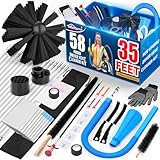


This guide explains what to look for in flexible duct brushes in 2026, including dimensions, materials, rod construction, comfort, price, warranty, and delivery details.
Decide These 3 Things First
- Measure the duct. Record its inside diameter, total length, and the number of bends. A 4-inch dryer vent and a 6-inch fireplace flue need different brush-head sizes.
- Identify the debris. Lint needs moderately stiff bristles. Loose dust benefits from softer bristles, while grease or compacted buildup may need a more aggressive brush and manual scraping.
- Choose the cleaning method. Decide whether you will push and pull the brush by hand or use a drill-compatible shaft. Drill use can speed up cleaning, but it also increases the risk of damaging thin, foil-style venting.
Size and Reach
Brush diameter should be slightly smaller than the duct’s interior diameter. For a typical 4-inch dryer vent, a 3.5- to 4-inch brush head is generally practical, provided the duct has enough clearance at its joints. A 6-inch head is better suited to a 6-inch duct, fireplace opening, or larger passage. Do not force an oversized brush through an elbow.
Reach is equally important. A 16-foot kit can work for a short, accessible dryer run, while a 30- to 35-foot kit gives you more flexibility for long runs or cleaning from both ends. The advertised length is usually the combined length of connected rods, not always the distance you can effectively clean. Rods may flex, bow, or lose pushing power as more sections are added.
For most residential dryer vents, 16 feet is a sensible minimum and 30 to 35 feet is the more versatile range. Measure from the dryer connection to the exterior hood rather than guessing from the home’s floor plan. If the vent exits through a roof or has several turns, consider a professional inspection instead of relying on maximum rod length alone.
Material and Bristle Design
Look for bristles described as nylon, polypropylene, or another durable synthetic. Nylon is flexible and effective for lint and dust, while polypropylene can offer a firmer feel for stubborn buildup. Bristles should be secure at the base and evenly distributed around the brush head. Sparse bristles may pass through debris without lifting it.
A rounded or slightly tapered head is easier to guide through bends than a blunt, oversized cylinder. For sensitive or lined ducts, choose softer bristles and avoid metal wire unless the manufacturer specifically approves it for that duct. Metal can scratch coatings, snag insulation, or damage flexible foil tubing.
Also inspect the rod material. Fiberglass rods are common because they combine flexibility with reasonable stiffness. Plastic or nylon rods can be lighter and more forgiving, but they may twist when pushed over long distances. Threaded metal connectors can be durable, though they may add weight and create a snag point if poorly finished.
Construction and Connection Security
The most important construction detail is how the rods and brush head connect. Threaded sections should screw together smoothly and remain tight during repeated pushing and pulling. A loose connection can leave a rod inside the duct. Look for connectors with consistent threads, locking nuts, or a design that resists unwinding as the brush rotates.
Check the connection between the brush and the rod separately. Some kits use an integrated brush head; others use interchangeable heads. Interchangeability is useful if you want a smaller brush for a narrow vent or a replacement head after the bristles wear down. Confirm the thread size before purchasing. An M8-compatible head, for example, will not automatically fit every rod system.
For drill-assisted cleaning, verify the shaft type and size. A 3/8-inch hex shaft is designed for a compatible drill chuck or bit holder, but a drill attachment does not make every flexible rod safe for powered use. Avoid running a brush at high speed in a fragile duct. If the manufacturer lists a speed limit, follow it; if no limit is provided, hand cleaning is the safer default.
Comfort and Cleaning Performance
A useful kit should be easy to control, not merely long. Rods that are too soft can buckle, while rods that are too rigid may resist bends and put pressure on duct joints. For a typical home dryer vent, a moderate-flex rod with a comfortable grip is a better choice than the stiffest option available.
Look for a handle, drill adapter, or end cap that keeps the rod from slipping out of your hand. Gloves are still recommended because lint and dust can contain sharp particles. A storage bag or compact case helps prevent threaded sections from becoming dirty or lost between uses.
Cleaning performance depends on technique. Push slowly, rotate only as directed, and pull the brush back periodically to remove collected lint. Do not assume a drill is always faster. Powered rotation can wrap lint around the brush, loosen a vent connection, or tear thin duct material. If the dryer vent includes a plastic or foil accordion section, disconnecting and cleaning it carefully may be safer than forcing a long brush through it.
Price Tiers: What You Get
Budget flexible duct brushes typically cost about $10 to $18. These may include a short 8- to 16-foot reach, one brush head, and basic rods. The 16-foot Holikme kit is an example of the kind of compact option found near the lower end of the market, listed for under $20 in the reference products. This tier suits a short, accessible dryer vent and occasional use.
Midrange kits usually cost $19 to $40. They commonly offer 30- to 35-foot reach, more rod sections, a handle, a lint trap brush, or a drill adapter. The 35-foot Holikme kit is listed for under $30, while the Sealegend 35-foot, 58-piece kit is listed for under $40. Treat high piece counts carefully: a large accessory count is useful only if the tools fit your duct and have a clear purpose.
Premium or specialized setups often cost $40 to $100 or more, particularly when they include multiple professional brush heads, reinforced rods, inspection tools, or components intended for larger ducts. A replacement 6-inch brush head with a 3/8-inch hex shaft is listed for under $10 in the reference products, but you may still need compatible M8 rods or an adapter. Price the complete system, not just the head.
Warranty and Replacement Parts
For an inexpensive brush used once or twice a year, a basic replacement policy may be adequate. Still, look for at least a 30-day return period and clear instructions for reporting a broken connector or missing part. Midrange kits are more attractive when they include a one-year warranty or replacement rods and brush heads.
Replacement availability matters more than a long warranty for a tool exposed to lint and friction. Check whether the seller offers individual rods, heads, adapters, and end caps. A kit that costs $30 but requires complete replacement after one damaged section may be less economical than a $20 kit with readily available parts.
Keep your receipt and photograph the kit when it arrives. Count every rod and accessory before use, especially when a listing advertises dozens of pieces.
Delivery and Assembly
Most flexible duct brush kits require simple assembly: connect the rods, attach the brush, and add a handle or drill adapter. Allow roughly 5 to 10 minutes for first-time setup. A kit with 35 feet of reach may contain 10 or more short rod sections, so storage and organization are worth considering.
Before ordering, check the package dimensions and delivered weight. A compact kit may weigh about 1 to 3 pounds, while a larger multi-piece set can be heavier and take up more closet space. Confirm that the product includes the exact brush diameter you need; a delivery box full of adapters cannot compensate for an unsuitable head.
On arrival, inspect for cracked rods, rough threads, loose bristles, and bent shafts. Assemble two or three sections by hand before inserting them into the duct. If the connection feels loose or gritty, stop and request a replacement rather than risking a lost component inside the vent.
Spec Checklist
| Spec | Budget | Mid | Premium |
|---|---|---|---|
| Typical price | $10–$18 | $19–$40 | $40–$100+ |
| Reach | 8–16 feet | 25–35 feet | 35+ feet or modular |
| Brush sizes | One basic head | One main head plus small accessories | Multiple interchangeable heads |
| Rod material | Plastic or basic fiberglass | Flexible fiberglass or reinforced polymer | Reinforced, replaceable sections |
| Drill compatibility | Often not included | Commonly includes an adapter | Dedicated shaft or controlled-speed system |
| Weight | About 1–2 pounds | About 1.5–3 pounds | About 2–5 pounds |
| Warranty expectation | 30-day return period | 30 days to 1 year | One year or longer |
Red Flags
- Unclear brush diameter: “Universal” is not a useful measurement when ducts vary from 4 to 6 inches or more.
- No connector specifications: Avoid kits that do not explain rod threads, shaft size, or replacement compatibility.
- Huge accessory counts without dimensions: Fifty pieces may include tiny brushes and unrelated tools rather than useful duct components.
- Metal bristles for every application: These can damage lined, coated, or flexible ducts.
- Unrestricted drill claims: A drill-ready shaft does not mean the brush can safely run at any speed or in every vent.
- Overly short return window: You may not discover a fit problem until installation day.
- Missing safety guidance: The instructions should address gloves, eye protection, dryer disconnection, and safe drill use.
FAQ
What size flexible duct brush should I buy?
Measure the inside diameter of the duct and choose a head slightly smaller than that opening. For a common 4-inch dryer vent, a brush around 3.5 to 4 inches is typically practical. Never force a head through a bend or connector.
Is a 16-foot or 35-foot duct brush better?
Choose 16 feet for a short, accessible run where you can also clean from the exterior. Choose 30 to 35 feet when the vent is long, difficult to access, or has several sections. Extra reach is not helpful if the rods become too flexible to control.
Can I use a drill with a flexible duct brush?
Only when the kit is specifically designed for drill use and the shaft fits your drill. Use the lowest practical speed, avoid forcing the brush, and do not use powered rotation on fragile or damaged ducting. A standard cordless drill may provide roughly 500 to 750 watts of maximum input, but the brush manufacturer’s instructions—not the drill’s power—should determine safe operation.
How often should I clean a dryer vent with a flexible brush?
Inspect and clean the vent at least once a year, and more often if the dryer runs frequently, drying times increase, or lint collects around the exterior hood. Disconnect the dryer before cleaning. If the duct is crushed, inaccessible, heavily clogged, or connected to damaged flexible tubing, arrange professional service instead of forcing a brush through it.
Ready to decide? Our #1 pick for 2026 is the Typical price.
Live price & availability on Amazon.







Write Your Review
No reviews yet. Be the first to share your experience!