
Forward vs reverse dryer vent brush options determine how safely you clear clogged laundry ducts with a cordless drill. Threaded rods require continuous forward rotation to avoid detaching inside pipes, whereas dual-direction locking mechanisms prevent accidental disconnects. Choosing the right system ensures effortless lint removal without hassle.
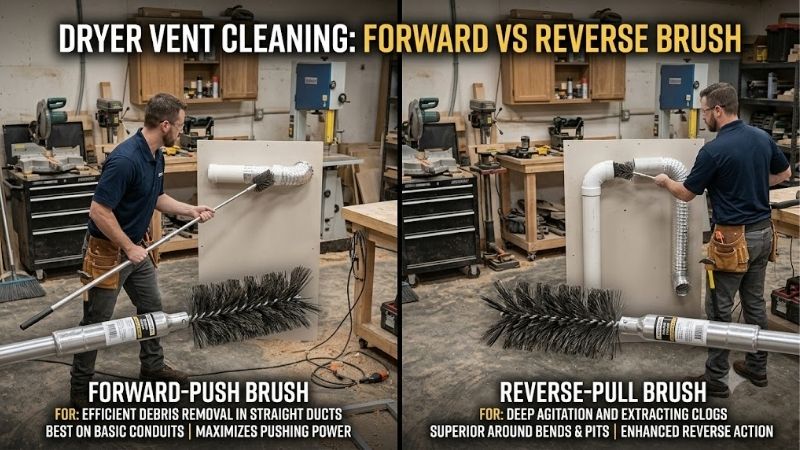
How to Choose the Right Forward vs Reverse Dryer Vent Brush
Understanding the mechanics behind a forward vs reverse dryer vent brush setup is vital before purchasing any drill attachment lint brush for your home. Standard screw threads require steady clockwise spinning to remain intact, while premium locking pins tolerate both rotational directions. Evaluating rod flexibility and connection security prevents costly pipe blockages.
Rod Connection Mechanism and Thread Security
Selecting an effective rotary vent cleaning kit requires analyzing how individual extension rods join together. Threaded male and female fittings rely strictly on friction and clockwise pressure to stay united. If you inadvertently reverse your power drill, these basic fittings quickly unscrew, leaving brush heads stranded deep inside your wall.
Conversely, push-button locking mechanisms use mechanical latching pins that lock each section firmly in place. This engineering allows full two-way rotation without any danger of accidental disconnection. Selecting sturdy locking hardware ensures peace of mind when navigating complex duct bends during intensive home cleaning sessions.
Duct Length and Rod Shaft Flexibility
Longer vent runs demand flexible materials that bend effortlessly through tight ninety-degree elbows. High-density nylon construction offers optimal tensile strength without snapping under rotational torque. Utilizing advanced button lock duct rods allows homeowners to extend their reach past thirty feet while maintaining complete structural integrity.
Excessively rigid rods risk puncturing thin foil ducting or jamming against rigid metal corners during pass-throughs. Premium kits balance elasticity with longitudinal stability so you can push deep into wall cavities. Always measure your total vent distance from dryer exit to outside exhaust cap before making your final tool purchase.
Brush Head Diameter and Bristle Density
Matching the synthetic brush diameter to your specific duct size guarantees thorough wall scrubbing. Most residential systems utilize standard four-inch round piping requiring dense helix bristles. Combining threaded nylon extension rods with self-feeding auger heads helps dislodge stubborn, packed lint clusters without damaging duct interior walls.
Soft synthetic bristles flex around heavy obstructions while stiff bristles provide aggressive scraping force. Quality brush heads feature reinforced center hubs that resist stripping under heavy motor torque. Choosing a head with integrated guiding tips ensures smooth navigation through offset transitions and flexible foil transition hoses.
Top Dryer Vent Cleaning Kits Compared
Comparing popular models reveals clear performance differences between a forward vs reverse dryer vent brush design during dryer duct clog removal tasks. Threaded models offer incredible budget value when rotated clockwise, whereas button-lock systems grant complete rotational freedom. Reviewing top Amazon products highlights the best options.
| Dryer Vent Cleaning Kit | Connection Type | Supported Drill Rotation | Max Reach | Best Feature |
|---|---|---|---|---|
| Holikme 30 Ft Kit | Threaded Screw | Forward Only | 30 Feet | Highly Affordable Base Kit |
| Gardus LintEater RLE202 | Threaded Screw | Forward Only | 12–24 Feet | Multi-Attachment Vacuum Adapters |
| Sealegend 37 Pc Set | Threaded Screw | Forward Only | 33–52 Feet | Comprehensive Accessory Package |
| Smart House Inc 30 Ft Kit | Threaded Screw | Forward Only | 30 Feet | Reinforced High-Tensile Nylon |
| Deflecto Duct Cleaning Kit | Threaded / Manual | Forward Only | 12 Feet | Compact Manual & Drill Hybrid |
Holikme 30 Feet Dryer Vent Cleaner Kit
Ideal for budget-conscious homeowners, this widely popular kit features flexible screw-connect nylon rods alongside an effective auger brush head. Its high-tensile shafts navigate long runs effortlessly while removing deep lint accumulation. Threaded metal fittings provide reliable stability as long as your power drill stays in forward drive.
However, reversing the drill direction will immediately unscrew the rod sections inside your ductwork. Users must apply electrical tape over joints for added security during operation. Overall, it stands as an exceptionally affordable, high-performing solution for standard, straightforward home vent cleaning projects.
Gardus LintEater RLE202 Rotary Cleaning System
Designed for DIYers seeking professional results, this flexible lint remover tool utilizes durable screw-connect rods and a self-feeding auger head. The kit includes vacuum adapters and blockage removal attachments to clear dense obstructions. It delivers exceptional scraping power through rigid metal ducts when operated in forward drive.
The threaded connectors require strict clockwise drill operation to prevent detachment inside hidden wall spaces. Some users note that rigid rod sections need careful handling around sharp duct bends. Nevertheless, its robust build quality and comprehensive attachment package justify the slightly higher price tag for homeowner maintenance.
Sealegend 37 Piece Dryer Vent Cleaner Set
Built for extensive home maintenance, this comprehensive package excels at complete dryer duct clog removal across extended vent lengths. The durable flexible rods couple securely with heavy-duty thread connections. Included lint grabbers, gap brushes, and collection bags deliver an all-in-one cleaning solution for complex household setups.
Because the rods rely on threaded joints, switching to reverse drive during extraction will decouple the assembly. Users must maintain forward rotation while pulling the brush outward to avoid leaving components behind. Despite this operational restriction, its versatile accessories offer unmatched cleaning value for long vent runs.
Smart House Inc 30 Foot Dryer Vent Kit
Engineered for smooth drill integration, this flexible cleaning kit relies on tight clockwise drill rotation to drive synthetic bristles through dirty vents. The reinforced nylon shafts resist snapping under high torque while navigating tight bends. It serves as an excellent mid-tier choice for routine annual maintenance in standard single-family homes.
The main drawback remains its threaded connection design, which prohibits counter-clockwise drill motion inside ductwork. Taping the joints is highly recommended to eliminate the risk of accidental separation. Overall, it delivers efficient lint removal and consistent durability when operated strictly according to forward-rotation guidelines.
Deflecto Dryer Duct Cleaning Brush Kit
Functioning as a reliable dryer fire prevention kit, this straightforward manual and drill-compatible tool effectively removes dangerous lint buildup. The durable synthetic brush head clears light to moderate debris without scratching duct interiors. It is perfect for short to medium vent lines requiring quick, hassle-free seasonal maintenance.
However, its shorter extension reach limits usability for long rooftop vent pathways through attic spaces. The screw-threaded connectors can also loosen if reversed, requiring strict forward drill operation throughout the process. It remains a dependable, cost-effective tool for compact residential vent lines and simple laundry room setups.
Essential Rules for Safe Vent Cleaning
Mastering a forward vs reverse dryer vent brush system prevents frustrating equipment failures and counterclockwise brush disconnect incidents inside your walls. Following correct drill speeds, keeping proper tape reinforcement, and choosing compatible duct materials guarantees a smooth process. Observe these proven maintenance practices.
Maintaining Forward Drill Rotation and Joint Security
Operating threaded rod systems requires total discipline to keep your power drill in forward mode throughout insertion and extraction. Clockwise rotation keeps the screw threads tightly locked against rotational friction. Flipping your drill trigger to reverse immediately loosens the joints, causing brush components to drop inside hidden wall voids.
To add extra safety, wrap high-quality electrical tape tightly around every connection joint before inserting rods into the ductwork. This simple precaution prevents accidental unthreading even if torque fluctuates unexpectedly. Taking a few extra minutes to secure every joint saves hours of tedious retrieval work later on.
Controlling Drill Speed and Torque Settings
High drill speeds create excessive friction that can melt flexible nylon rods or damage delicate duct walls. Set your cordless drill to a low or medium speed setting with low torque to maintain steady control. Gentle, controlled rotation allows the brush bristles to scrub away lint without binding or whipping wildly inside narrow spaces.
If you feel sudden resistance while pushing the brush forward, stop spinning immediately and assess the obstacle. Forcing a high-torque drill through jammed lint can snap rod connectors or puncture thin transition hoses. Work incrementally by pulling the rod back slightly while maintaining forward rotation to clear stubborn blockages safely.
Matching Tools to Ductwork Materials
Different duct materials react uniquely to rotary brush pressure during thorough cleaning operations. Rigid galvanized steel ducts tolerate aggressive rotational force and stiff bristles without denting. Flexible foil or vinyl transition ducts require gentle hand movement and soft bristle heads to avoid tearing delicate spiral wire enclosures.
Never use heavy drill power on non-rigid foil ducting, as rotating brush tips can easily tear flimsy aluminum walls. Inspect your visible vent pipe materials before selecting drill speed or attachment pressure. Replacing damaged foil hoses with semi-rigid metal pipes improves airflow safety and withstands annual mechanical brush cleaning.
Frequently Asked Questions
Homeowners exploring a forward vs reverse dryer vent brush setup often have questions regarding drill compatibility, safety, and stuck rod retrieval. Addressing these common inquiries helps you operate your cleaning tools safely and effectively. Here are clear, expert answers to key questions about dryer vent maintenance tools.
What happens if I accidentally put my drill in reverse?
If using standard threaded rods, running your drill in reverse will unscrew the threaded connections inside the vent pipe. This separates the brush head or rod sections, leaving them trapped in your wall. Only dual-direction button lock duct rods can safely tolerate reverse rotation without uncoupling or coming apart during use.
Should a threaded brush become detached inside the duct, avoid pushing further into the line. You can attempt retrieval using a specialized extraction tool, a flexible claw, or by feeding a wire hook from the outer vent cap. If DIY retrieval fails, contacting a professional vent cleaning service prevents duct damage.
How often should I clean my residential dryer vent?
Most manufacturers recommend thoroughly cleaning your dryer vent system at least once every twelve months. Homes with large families, long duct runs, or frequent laundry cycles may require cleaning every six months. Using high-quality threaded nylon extension rods keeps airflow unrestricted and prevents dangerous lint build-up over time.
Warning signs like increased drying times, burning odors, or excessive heat in the laundry room signal immediate cleaning is needed. Regular maintenance reduces energy bills while dramatically lowering the risk of destructive laundry fires. Establishing a routine cleaning schedule keeps your appliance operating at peak efficiency.
Can I clean my vent manually without using a power drill?
Yes, many rotary vent kits permit manual push-and-pull operation without attaching a power drill motor. Manually rotating an auger brush head while pushing through the duct effectively dislodges loose lint in shorter runs. However, manual cleaning requires more physical effort and may not clear heavy, compacted debris effectively.
For short vent runs under eight feet, manual scrubbing offers a simple, safe alternative that eliminates rod disconnect risks entirely. For long duct paths with multiple turns, drill-powered rotation provides the high scraping force necessary to clear stubborn build-up. Choose the method that best matches your vent length and setup.
Do button-lock brush kits justify the extra cost?
Button-lock systems cost more than basic screw-connect sets, but they offer unmatched safety and convenience. Because each flexible lint remover tool section snaps firmly into place with a mechanical latch, you can rotate the drill in forward or reverse without fear. This feature is especially valuable when backing out of tight elbows.
If your home features a complex vent path with multiple bends, investing in a button-lock kit prevents catastrophic rod loss inside wall cavities. The added security and time saved make button-lock models a wise long-term investment for DIY homeowners. They eliminate the need for electrical tape wrapping on every single joint.
Final Thoughts
Selecting the ideal forward vs reverse dryer vent brush system depends on your budget and duct layout complexity. Standard threaded sets excel at economical dryer duct clog removal when operated strictly with clockwise drill rotation. Upgrading to button-lock rods guarantees complete bidirectional safety for stress-free maintenance.
Product links and buying checks
As an Amazon Associate, we earn from qualifying purchases.
- Gardus LintEater RLE202 on Amazon — Check the exact model, selected variant and seller before ordering.
- Holikme 30-foot dryer vent cleaning kit on Amazon — Check the exact model, selected variant and seller before ordering.
Prices, availability and included accessories can change. Review the current listing and the compatibility guidance above before purchasing.
As an Amazon Associate we earn from qualifying purchases at no extra cost to you.












Write Your Review
No reviews yet. Be the first to share your experience!